
Planning an event involves dozens of decisions, but few shape the guest experience as powerfully as the way the food is served. The right event catering format can set the tone, control the flow, and leave guests raving long after the night ends. Choose the wrong one, and even the most beautifully prepared menu can fall flat.
Whether you’re organizing a corporate conference, a wedding reception, or a cocktail party, understanding the key catering service styles will help you make a confident choice that aligns with your space, your guests, and your vision.
The Big Four: Catering Service Styles Explained
Each of these catering service styles comes with its own strengths, logistics, and ideal use cases. Understanding how they differ is the first step toward building an event experience that feels effortless for guests and stress-free for you.
-
Plated (Sit-Down) Service
Plated service is the most formal of all catering formats. Guests are seated, and individually portioned courses are brought to the table by servers. Think multi-course dinners with starters, mains, and desserts served in graceful succession.
Best for: Weddings, gala dinners, awards ceremonies, and black-tie corporate events.
Why it works: Plated service signals sophistication. It creates a structured dining experience that encourages conversation and keeps energy focused at the table. It also gives you precise control over portion sizes and dietary accommodations, since meals can be pre-assigned to guests.
What to plan for: You’ll need adequate staffing, typically one server per 8–10 guests, and a kitchen capable of firing multiple courses on a tight timeline. Confirming seating and venue space in advance helps create a smooth, well-organized event.
Pacing tip: Build a 20–30-minute buffer between courses to accommodate speeches, toasts, or presentations without disrupting the meal.
-
Buffet Service
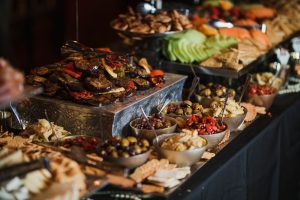
A buffet places food on long serving stations where guests serve themselves, moving through the line at their own pace.
Best for: Conferences, corporate lunches, family celebrations, casual weddings, and large community events.
Why it works: Buffets are flexible, scalable, and crowd-pleasing. They allow guests to customize their plates, accommodate diverse dietary preferences with ease, and reduce front-of-house staffing costs. For larger guest counts, 100 people or more, a buffet often delivers more value per dollar than plated service.
What to plan for: You’ll need enough linear space for serving tables and traffic flow. Double-sided buffet lines dramatically reduce wait times for larger crowds. Budget for chafing dishes and warming equipment to maintain food temperature, and plan for at least one staff member per station to replenish dishes and assist guests.
Guest experience note: Buffets work best when the food is abundant and visually appealing. A well-dressed buffet table with varied heights, garnishes, and clear labeling elevates the whole experience.
-
Food Stations
Food stations are themed, interactive serving points scattered throughout the venue, a carving station here, a pasta bar there, a dessert display in the corner. Unlike a traditional buffet, guests move between stations rather than moving through a single line.
Best for: Cocktail receptions, wedding celebrations with a social, mingling-focused atmosphere, and creative corporate events.
Why it works: Stations encourage movement and conversation. They double as entertainment; watching a chef toss fresh pasta or slice a roast is part of the appeal. This format works beautifully when you want guests to feel engaged and surprised throughout the event rather than seated for long stretches.
What to plan for: Each station requires its own staffing, equipment, and dedicated floor space. Coordinate station placement carefully so traffic doesn’t bottleneck. Stagger the opening of stations across the event timeline to draw guests to different parts of the room throughout the evening.
Pacing tip: Introduce stations gradually, open two or three at the start, and reveal a late-night snack station toward the end to re-energize the crowd.
-
Passed Hors d’Oeuvres
Servers circulate through the crowd carrying trays of bite-sized appetizers and small bites, bringing the food directly to guests.
Best for: Cocktail hours, networking events, pre-dinner receptions, and as a supplement to any of the above formats.
Why it works: Passed hors d’oeuvres keep guests fed without interrupting conversation or drawing them away from key moments. They’re ideal for the pre-event period when guests are still arriving, or during presentations and speeches when you want people to be comfortable but not distracted by a full dinner setting.
What to plan for: Approximately 4–6 pieces per person per hour during a cocktail-only event, or 2–3 pieces per person if passed apps precede a seated meal. Ensure your serving staff is briefed on every item, and guests will ask about ingredients and allergens.
Making the Final Call: A Practical Checklist
When evaluating buffet vs plated vs stations for your event, run through these questions:
- Guest count: Large groups (150+) often flow more smoothly through buffet or station formats. Intimate groups of under 80 are well-suited to plated service.
- Event formality: The more formal the occasion, the stronger the case for plated. The more social and relaxed, the better a station or cocktail format performs.
- Venue layout: This plays a crucial role in your catering choice. Ask yourself: Do you have enough room for buffet lines with clear traffic flow? Can stations be positioned without creating dead zones? Evaluating these factors will help you select a style that fits your space and ensures smooth service.
- Budget: Plated service typically carries higher labor costs. Buffets and stations offer flexibility to reallocate the spend toward higher-quality ingredients.
- Timeline: Is this a working lunch with 45 minutes on the clock, or a four-hour celebration? Match the service style to the time you actually have.
The Best Catering Service Styles Work with Your Event, Not Against It
There’s no universal answer to the best catering service styles, only the right fit for your specific event. A hybrid approach, such as passed hors d’oeuvres during the cocktail hour, followed by plated dinner service, with a dessert station, can create a seamless, memorable experience that feels intentional and well-timed.
Start with your guests’ experience and work backward. When the service style serves the moment, everything else falls into place.
Ready to plan your event’s catering? The team at Plate Perfect Catering specializes in crafting service experiences tailored to every event type, guest count, and vision. From elegantly plated dinners to lively food stations, we’ll help you choose the format that makes your occasion unforgettable. Contact us to start planning today.